Specialisation
Intraday, Day & High-Frequency Trading
Trading as a discipline: market microstructure, systematic intraday and day-trading strategies, algorithmic execution, high-frequency market making, low-latency technology, risk controls and regulation.
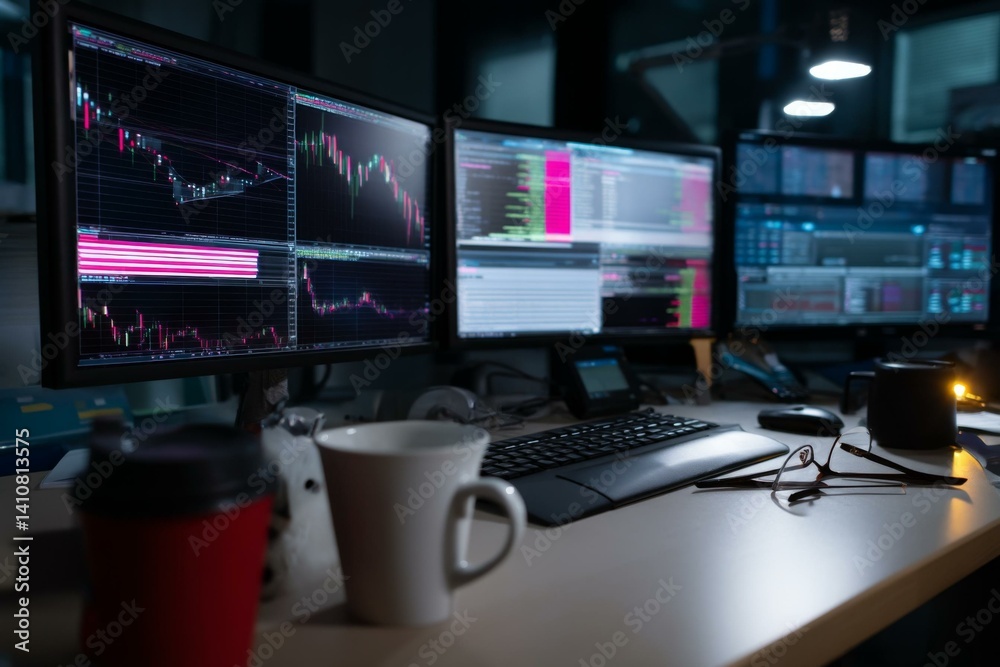
This specialisation covers systematic trading across all time horizons. It starts with discretionary intraday and day trading with quantitative discipline. It ends with fully automated strategies that operate in microseconds. People who build trading venues and derivatives infrastructure teach the specialisation.
We teach trading as statistics, risk and technology. We do not teach trading tips. We backtest each strategy correctly, evaluate it out of sample, and assess it with realistic transaction costs and regulatory constraints.
Specialisation lead:
Prof. Patrick Gruhn
Professor · Founding faculty · LL.M., MBA · Professor of Practice in Entrepreneurship, Digital Innovation & Ethics (EIM)
Modules
01Market Microstructure and Order Book Dynamics
- Limit order books, price formation and liquidity
- Spreads, depth, market impact and adverse selection
- Auctions, dark pools and fragmentation
- Microstructure of crypto and derivatives markets
02Intraday and Day Trading Strategies
- Momentum, mean reversion and breakout approaches on intraday data
- Volatility, volume and event-driven strategies
- Position sizing, risk and money management, drawdown control
- Trading psychology, discipline and evidence-based journaling
03Systematic and Algorithmic Trading Research
- Hypothesis-driven strategy research and feature design
- Backtesting, overfitting, walk-forward and combinatorial validation
- Transaction cost modelling and capacity
- Statistical arbitrage and pairs/basket trading
04High-Frequency Trading and Market Making
- Latency, co-location and tick data infrastructure
- Queue position, inventory and market-making models
- Signals from order flow imbalance and microprice
- Risk in HFT: adverse selection, flash events and kill switches
05Execution Algorithms and Transaction Cost Analysis
- VWAP, TWAP, implementation shortfall and adaptive algorithms
- Smart order routing and venue analysis
- Best execution obligations and TCA reporting
- Execution in fragmented and 24/7 markets
06Trading Technology and Digital Asset Markets
- FIX and market data protocols, matching engines and gateways
- Low-latency systems: C++/Rust fundamentals, networks, hardware
- Crypto exchange APIs, perpetual futures, funding rates and on-chain data
- Cloud versus co-location, monitoring and resilience (DORA)
07Risk, Controls and Regulation of Algorithmic Trading
- MiFID II requirements for algorithmic trading (RTS 6), MAR and market abuse
- Pre-trade risk controls, circuit breakers and test obligations
- Governance, record keeping and surveillance
- Ethics of automated markets
SIDF simulation environment
You develop and test strategies and execution algorithms in a simulated order book. The simulation uses historical tick data and realistic latency and cost models. You do this before you use real capital.
Who is this programme for?
- Discretionary traders who want to become systematic
- Quant developers, execution specialists and market makers
- Engineers who build trading systems, exchanges or digital asset venues
- Risk, surveillance and compliance professionals who are responsible for algorithmic trading
Next steps
Postgraduate Certificate
PGCert in Business Informatics & Data Science or in Business Administration, specialisation Intraday, Day & High-Frequency Trading (30 ECTS)
Master’s degree
MSc in Business Informatics & Data Science or MBA in Business Administration, specialisation Trading (90 ECTS)
PhD
Dissertation in market microstructure, algorithmic trading or trading technology (Level 8)
Career options
- Systematic or discretionary trader, market maker
- Quant developer, execution or algo specialist
- Trading systems engineer at exchanges, brokers or digital asset venues
- Algo trading risk, surveillance and compliance
SIDF programmes are academic programmes. They are not investment advice. They do not promise trading profits.
Ready for the next step in digital finance?
Apply for a Postgraduate Certificate, a Master’s programme or the PhD. Or talk to us first.